The job market is changing faster than ever before. New technologies, digital transformation, artificial intelligence, remote work, and global competition are reshaping the skills employers expect from candidates. In 2026, academic qualifications alone are no longer enough to secure a good job. Employers increasingly look for candidates who combine technical knowledge with practical skills, adaptability, and problem-solving abilities. Whether a student wants to work in information technology, banking, healthcare, marketing, engineering, education, or government sectors, possessing the right skills can significantly improve employability and career growth. Understanding what employers truly value helps students prepare effectively and remain competitive in an evolving workplace.
Why Skills Matter More Than Ever in 2026
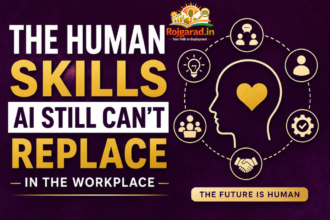
The traditional hiring model focused heavily on degrees and academic achievements. While educational qualifications remain important, organizations today prioritize individuals who can contribute immediately after joining. Businesses are facing rapid technological changes and need employees who can learn quickly, communicate effectively, solve problems independently, and work with modern digital tools. Companies are increasingly investing in skill-based hiring because practical abilities often predict workplace performance better than academic marks alone. As automation handles repetitive tasks, uniquely human skills such as creativity, leadership, emotional intelligence, and strategic thinking are becoming even more valuable.
The Shift from Degrees to Skills
Many global and Indian employers have gradually moved toward skills-based recruitment practices. Recruiters now examine portfolios, certifications, project experience, internships, and demonstrated competencies alongside formal education. This shift creates opportunities for students from diverse educational backgrounds. A candidate who continuously upgrades skills and gains practical experience often has an advantage over someone who relies only on academic credentials. In 2026, lifelong learning has become an essential part of professional success.
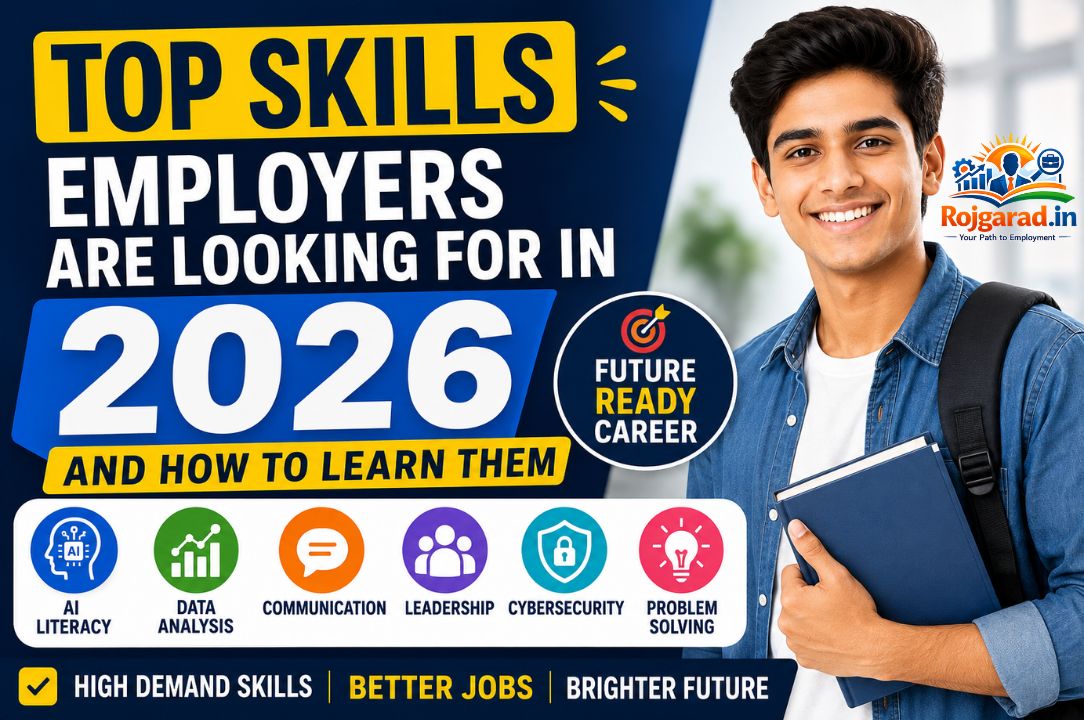
Top Skills Employers Are Looking for in 2026
| Skill | Demand Level | Suitable For |
|---|---|---|
| Artificial Intelligence Literacy | Very High | IT, Business, Marketing |
| Data Analysis | Very High | Finance, IT, Research |
| Communication Skills | Very High | All Industries |
| Problem Solving | Very High | All Industries |
| Digital Marketing | High | Marketing, Business |
| Cybersecurity Awareness | High | IT, Banking |
| Leadership | High | Management Roles |
| Emotional Intelligence | High | HR, Customer Service |
| Project Management | High | Corporate Roles |
| Adaptability | Very High | All Industries |
Artificial Intelligence Literacy
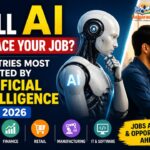
Artificial Intelligence is no longer limited to software engineers. Employers across sectors now expect candidates to understand the basics of AI tools and how they can improve productivity. AI literacy means understanding how AI systems work, where they can be used, and how to use popular AI-powered tools responsibly. Employees who know how to automate routine tasks, analyze information efficiently, and collaborate with AI tools are becoming valuable assets in modern organizations. AI literacy does not necessarily require advanced programming knowledge. Even non-technical professionals can benefit from understanding AI applications relevant to their industries.
How to Learn AI Skills
Students can begin by exploring free AI courses available on learning platforms, watching educational videos, experimenting with AI productivity tools, and studying real-world business applications. Understanding prompt writing, AI-assisted research, content generation, and workflow automation can provide a strong foundation. Practical experimentation often teaches more than theoretical learning alone.
Data Analysis and Data Literacy
Data has become one of the most valuable resources in the modern economy. Businesses rely on data to make decisions about customers, operations, marketing campaigns, and future strategies. As a result, employers increasingly seek candidates who can interpret information, identify trends, and draw meaningful conclusions from data. Data literacy involves understanding charts, reports, spreadsheets, and business metrics. Even roles outside the technology sector now require basic data interpretation skills.
How to Learn Data Analysis
Students can start with spreadsheet software such as Excel and gradually learn data visualization tools, business analytics concepts, and basic statistical methods. Working on small projects using publicly available datasets can help develop practical analytical thinking.
Communication Skills
Communication remains one of the most important professional skills regardless of industry. Employers value candidates who can express ideas clearly, write professional emails, participate confidently in meetings, and interact effectively with clients and colleagues. Good communication reduces workplace misunderstandings and improves collaboration. In multinational work environments, strong communication often determines leadership potential and career advancement opportunities.
How to Improve Communication Skills
Reading newspapers, practicing public speaking, participating in discussions, writing regularly, and improving English proficiency can significantly enhance communication abilities. Students should focus on clarity rather than using complicated language. Consistent practice builds confidence over time.
Problem-Solving Ability
Employers increasingly hire people who can identify challenges, evaluate solutions, and make informed decisions. Modern workplaces face constant changes, requiring employees who can think critically and adapt quickly. Problem-solving skills help organizations improve efficiency, reduce costs, and overcome obstacles. Recruiters often assess this ability through interviews, case studies, and aptitude tests.
How to Develop Problem-Solving Skills
Students can strengthen problem-solving abilities by working on projects, participating in competitions, solving puzzles, learning analytical frameworks, and evaluating real-world business situations. Exposure to different challenges improves decision-making confidence.
Digital Marketing Skills
As businesses continue expanding their online presence, digital marketing remains one of the fastest-growing career fields. Companies need professionals who understand search engine optimization (SEO), social media marketing, content creation, email marketing, and online advertising. Digital marketing combines creativity with analytical thinking, making it attractive for students from various educational backgrounds.
How to Learn Digital Marketing
Students can create personal blogs, manage social media pages, study SEO fundamentals, and experiment with content creation. Many free certification programs provide structured learning pathways for beginners.
Cybersecurity Awareness
With increasing cyber threats, organizations prioritize employees who understand digital security principles. Cybersecurity awareness is no longer limited to security specialists. Every employee handling company information must understand safe online practices, password management, phishing risks, and data protection measures. Businesses prefer candidates who can contribute to a secure digital environment.
Learning Cybersecurity Basics
Students can begin by studying online safety practices, network fundamentals, cybersecurity concepts, and common cyber threats. Entry-level cybersecurity courses provide a strong foundation for future specialization.
Leadership Skills
Leadership is not limited to managerial positions. Employers seek individuals who can take responsibility, motivate teams, solve conflicts, and guide projects toward successful outcomes. Even entry-level employees demonstrating leadership qualities often receive greater growth opportunities. Leadership reflects initiative, accountability, and the ability to influence positive outcomes.
Building Leadership Abilities
Students can develop leadership through college clubs, volunteer activities, event management, internships, and team-based projects. Taking responsibility in small situations gradually builds leadership confidence.
Emotional Intelligence
Emotional intelligence refers to understanding and managing emotions while effectively interacting with others. Employers increasingly value emotional intelligence because workplaces rely heavily on teamwork and collaboration. Employees with strong emotional intelligence handle stress better, communicate effectively, and maintain productive professional relationships.
How to Improve Emotional Intelligence
Active listening, self-awareness, empathy, and constructive feedback practices help strengthen emotional intelligence. Reflecting on personal reactions and understanding others’ perspectives are useful habits for professional development.
Project Management Skills
Organizations increasingly operate through projects rather than traditional task-based structures. Project management skills involve planning, organizing resources, tracking progress, managing risks, and ensuring successful outcomes. Employees with project management knowledge often contribute more effectively to organizational goals.
Learning Project Management
Students can learn project planning techniques, scheduling methods, collaboration tools, and workflow management systems. Managing academic projects and internships provides valuable practical experience.
Adaptability and Learning Agility
One of the most important skills for 2026 is adaptability. Technologies, industries, and job roles continue evolving rapidly. Employers seek individuals who can learn new systems, embrace change, and remain productive during transitions. Adaptability ensures long-term employability even when industries undergo disruption.
How to Become More Adaptable
Students should cultivate curiosity, stay informed about industry developments, learn continuously, and remain open to new experiences. Flexibility often becomes a competitive advantage in dynamic work environments.
Technical Skills vs Soft Skills
| Technical Skills | Soft Skills |
|---|---|
| Data Analysis | Communication |
| Coding | Leadership |
| AI Literacy | Emotional Intelligence |
| Cybersecurity | Teamwork |
| Digital Marketing | Adaptability |
| Project Tools | Problem Solving |
Skills That May Become Less Valuable
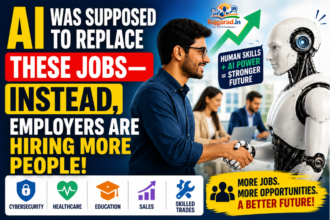
As automation continues to expand, repetitive administrative tasks, basic data entry, and routine processing activities may decline in importance. Employers now prioritize higher-order thinking, creativity, analytical reasoning, and strategic decision-making. Students should focus on skills that complement technology rather than compete directly with automation systems.
Best Learning Resources for Students
The internet has made skill development more accessible than ever before. Students can use online learning platforms, educational YouTube channels, digital libraries, virtual workshops, and industry certifications to build valuable competencies. Consistency matters more than expensive courses. Even dedicating one hour daily to learning can produce substantial results over time. Practical application should always accompany theoretical study.
Building a Skill-Based Resume
Modern resumes should highlight projects, certifications, internships, achievements, and practical experiences. Employers increasingly evaluate evidence of skill application rather than simply reading qualification lists. Students should create portfolios showcasing their work, whether it involves writing, coding, design, research, marketing, or other professional activities. Demonstrating real-world application often creates a stronger impression than listing skills without proof.
Common Mistakes Students Make While Learning Skills
Many students attempt to learn too many skills simultaneously, leading to shallow understanding and limited mastery. Others collect certificates without developing practical competence. Some focus exclusively on technical knowledge while neglecting communication and interpersonal development. Successful professionals typically build expertise gradually, applying what they learn through projects and real-world experiences.
Student Advice
Students should focus on becoming adaptable learners rather than chasing every trending skill. Instead of trying to master multiple subjects at once, select two or three high-demand skills aligned with career interests and develop them deeply. Practical projects, internships, volunteer work, and freelancing opportunities provide valuable experience that employers appreciate. Building a strong professional profile requires patience and consistency. Students should also invest in communication, critical thinking, and digital literacy because these abilities remain valuable regardless of industry changes. Most importantly, learning should continue even after securing a job, as career success increasingly depends on continuous skill development.
Career Impact
The right skills can significantly influence career opportunities, salary growth, job security, and professional advancement. Candidates who possess in-demand skills often receive better interview opportunities, higher starting salaries, and faster promotions. Skill development also increases career flexibility by allowing professionals to transition between industries and roles more easily. As organizations continue embracing technology and innovation, employees who combine technical expertise with strong interpersonal abilities will remain highly competitive. Investing in skill development today can create long-term advantages that continue generating benefits throughout an individual’s professional life.
The Future of Employability in India
India’s workforce is entering a period of significant transformation driven by technology, entrepreneurship, digital services, and global business integration. Future employers will increasingly reward creativity, adaptability, digital competence, and problem-solving capabilities. While academic qualifications will remain important, skills will become the primary differentiator between average candidates and outstanding professionals. Students who embrace lifelong learning and continuously update their capabilities will be better positioned to succeed in the modern economy.
FAQs
1. Which skill is most in demand in 2026?
Artificial Intelligence literacy, data analysis, communication skills, and adaptability are among the most in-demand skills across industries in 2026.
2. Can students learn these skills for free?
Yes. Many online platforms, educational websites, videos, and community resources provide free learning opportunities for skill development.
3. Do employers value skills more than degrees?
Most employers value both, but practical skills increasingly influence hiring decisions because they demonstrate workplace readiness.
4. How long does it take to learn an employable skill?
Basic proficiency can often be achieved within a few months of consistent practice, while mastery may require years of experience.
5. Which skills are useful in every career?
Communication, problem-solving, adaptability, emotional intelligence, and digital literacy are valuable across nearly all professions.