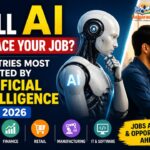
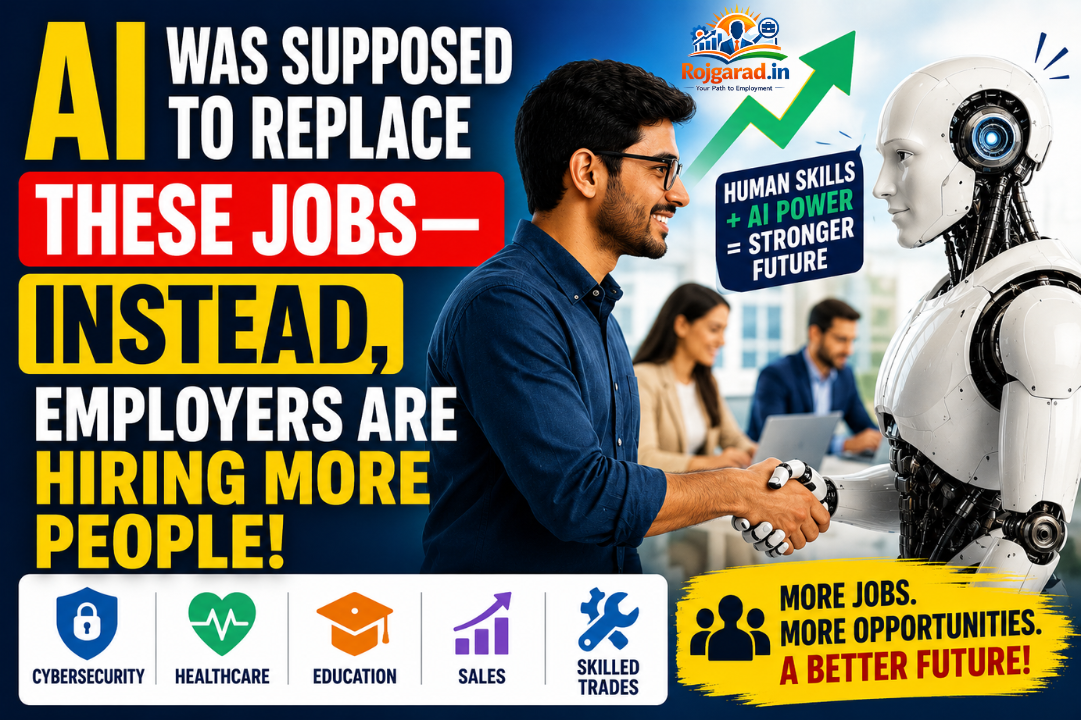
For years, headlines warned that artificial intelligence would replace millions of jobs. Students worried about choosing the wrong career path, professionals feared losing their positions, and businesses explored automation as a way to reduce costs. As AI technology rapidly advanced, many people expected widespread unemployment across multiple industries. However, an interesting reality has emerged in 2026. In several sectors that were predicted to shrink because of automation, employers are actually hiring more people. Instead of replacing workers entirely, AI has often increased productivity, created new business opportunities, and generated demand for additional employees. This unexpected trend is reshaping the conversation about the future of work and offering valuable lessons for students preparing for tomorrow’s job market.
Key Insights at a Glance
| Topic | Summary |
|---|---|
| AI and Employment | AI is changing jobs, but many industries are increasing hiring rather than reducing staff. |
| Human Advantage | Creativity, communication, judgment, and emotional intelligence remain difficult for AI to replace. |
| Growing Sectors | Healthcare, education, technology, cybersecurity, sales, skilled trades, and AI management roles are expanding. |
| Student Opportunity | Learning AI tools alongside human skills creates stronger career prospects. |
| Future Trend | Most companies are combining AI with human workers instead of replacing employees completely. |
Why Predictions About AI Replacing Jobs Were Often Oversimplified
Many early predictions focused on what AI could technically do rather than how businesses actually operate. While AI systems can perform certain tasks quickly and efficiently, organizations rarely function through isolated tasks alone. Real workplaces involve collaboration, problem-solving, customer relationships, decision-making, leadership, creativity, and accountability. A chatbot may answer customer questions, but businesses still need people to handle complaints, build trust, and improve services. AI can generate reports, but managers must interpret results and make strategic decisions. The assumption that automation would instantly replace entire professions ignored the complexity of human work and the importance of skills that machines struggle to replicate.
The Difference Between Replacing Tasks and Replacing Jobs
One of the most important concepts in understanding AI’s impact is the distinction between tasks and jobs. A job typically consists of dozens of responsibilities, not just one activity. AI may automate repetitive tasks such as scheduling appointments, generating drafts, organizing data, or processing transactions. However, the remaining responsibilities often become more valuable. When routine work is removed, employees can spend more time solving problems, serving customers, innovating products, and contributing to business growth. In many cases, this increased efficiency encourages companies to expand operations, leading to more hiring rather than less.
How AI Is Creating Business Growth
Businesses adopt technology to improve productivity and competitiveness. When AI helps employees complete work faster, companies often gain the ability to serve more customers, launch new products, enter new markets, and increase revenue. This growth frequently creates demand for additional workers. For example, an e-commerce company using AI-powered customer support can handle more customer inquiries and process more orders. As sales increase, the company may hire more marketing professionals, logistics managers, customer success specialists, and product developers. Instead of reducing employment, AI can become a growth engine that supports workforce expansion.
Industries Where Employers Are Hiring More Despite AI
Healthcare
Healthcare is one of the strongest examples of an industry where AI has increased opportunities rather than eliminated them. AI tools assist doctors with diagnostics, medical imaging analysis, patient monitoring, and administrative tasks. However, healthcare remains fundamentally human-centered. Patients need empathy, communication, trust, and personalized care. Hospitals and clinics continue hiring doctors, nurses, therapists, technicians, healthcare administrators, and support staff. AI often improves efficiency, allowing healthcare professionals to spend more time focusing on patient care instead of paperwork.
Education and Training
Many people believed AI-powered tutoring systems would reduce the need for teachers. Instead, educational institutions continue hiring educators because learning involves much more than delivering information. Teachers motivate students, answer unique questions, provide emotional support, encourage critical thinking, and help learners develop confidence. AI tools can assist with lesson planning, grading, and personalized learning recommendations, but they cannot fully replace the human connection that drives effective education. As digital learning expands, demand for educators who understand technology is actually increasing.
Cybersecurity
AI has transformed cybersecurity by helping organizations detect threats faster and analyze large amounts of data. However, cybercriminals are also using advanced technologies, creating new security challenges. As a result, businesses need more cybersecurity professionals than ever before. Security analysts, ethical hackers, incident response specialists, and risk management experts remain in high demand because human judgment is critical when responding to evolving threats.
Skilled Trades
Electricians, plumbers, mechanics, construction workers, and maintenance technicians were rarely the focus of AI replacement discussions, yet their importance continues to grow. Skilled trades require hands-on work in unpredictable environments where human adaptability is essential. AI can assist with planning and diagnostics, but physical problem-solving in real-world situations remains difficult to automate. Many countries are experiencing shortages of skilled trade workers, leading to strong hiring demand.
Sales and Business Development
AI can identify leads, analyze customer data, and automate follow-up messages. Despite these capabilities, companies continue hiring sales professionals because purchasing decisions often depend on trust, relationships, negotiation, and personalized solutions. Businesses need representatives who can understand customer needs, build long-term partnerships, and close complex deals. AI has become a support tool rather than a replacement for successful sales teams.
Technology and Software Development
The rise of AI coding assistants led some observers to predict fewer software development jobs. However, demand for developers remains strong because AI-generated code still requires testing, customization, security evaluation, and integration into larger systems. Companies also need professionals who can build AI applications, manage infrastructure, oversee data quality, and create innovative digital products. Rather than reducing demand, AI has expanded the scope of technology careers.
Comparison Of Predicted Decline vs Actual Demand
| Profession | Early AI Prediction | Reality in 2026 |
|---|---|---|
| Teachers | Reduced demand | Continued hiring growth |
| Software Developers | Fewer coding jobs | Strong demand for AI-enabled developers |
| Nurses | Automation of healthcare tasks | Ongoing workforce shortages |
| Sales Professionals | AI replacing sales teams | Companies still expanding sales departments |
| Cybersecurity Experts | Automated security systems | Growing demand due to complex threats |
| Skilled Trades | Increased automation | Persistent hiring demand |
New Jobs Created by AI
Artificial intelligence has created entirely new career categories that barely existed a decade ago. Organizations now hire AI trainers, prompt engineers, machine learning specialists, AI auditors, ethics consultants, automation managers, conversational AI designers, data annotation experts, and AI product managers. These roles demonstrate how technological innovation often generates opportunities alongside disruption. Many of these careers combine technical knowledge with business understanding and communication skills, making them attractive options for students entering the workforce.
Why Human Skills Are Becoming More Valuable
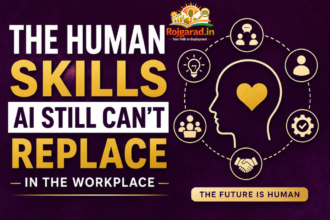
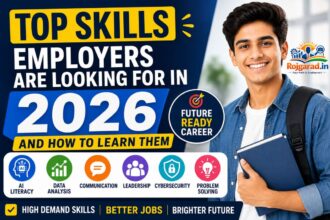
As machines become better at routine tasks, uniquely human abilities become increasingly important. Employers consistently emphasize communication, creativity, leadership, emotional intelligence, collaboration, adaptability, and critical thinking. AI can process information quickly, but it cannot fully understand human emotions, organizational culture, ethical considerations, or complex social situations. Workers who develop strong interpersonal skills often become more valuable because they complement AI rather than compete with it.
The Rise of AI-Augmented Employees
A growing trend in 2026 is the emergence of AI-augmented employees. These professionals use AI tools to enhance productivity, improve decision-making, and automate repetitive work. Rather than spending hours on manual tasks, they focus on strategy, innovation, and relationship building. Companies increasingly prefer hiring workers who understand how to leverage AI effectively. The future workforce is not divided between humans and machines; instead, it consists of humans working alongside intelligent technologies.
Comparison Of Traditional Worker vs AI-Augmented Worker
| Area | Traditional Worker | AI-Augmented Worker |
|---|---|---|
| Research | Manual information gathering | AI-assisted research and analysis |
| Writing | Creates content from scratch | Uses AI for drafting and refinement |
| Problem Solving | Relies solely on personal knowledge | Combines expertise with AI insights |
| Productivity | Limited by available time | Enhanced through automation tools |
| Learning | Slower skill acquisition | Faster access to knowledge and resources |
Small Businesses Are Hiring More Because of AI
Large corporations are not the only beneficiaries of AI technology. Small businesses are increasingly using affordable AI tools to compete with larger organizations. Entrepreneurs can automate administrative work, manage marketing campaigns, analyze customer behavior, and improve operations without hiring large support teams. As these businesses grow, they often create additional employment opportunities in sales, customer support, operations, logistics, and management. AI lowers barriers to growth, enabling smaller companies to expand faster than before.
Why Customer Service Jobs Have Not Disappeared
Customer service is frequently cited as one of the industries most vulnerable to automation. While AI chatbots handle many routine questions, customer expectations continue to evolve. People still prefer human assistance for complex issues, emotional situations, complaints, and important purchasing decisions. Businesses increasingly recognize that customer experience can be a major competitive advantage. As a result, many organizations are investing in both AI systems and skilled customer support professionals who can deliver personalized service.
The Economic Effect of Increased Productivity
Higher productivity often leads to economic expansion. When businesses produce more goods and services efficiently, costs may decrease, customer demand can rise, and new markets become accessible. Historically, productivity improvements have contributed to job creation rather than permanent job destruction. Although certain roles change or disappear, new opportunities emerge as industries evolve. AI appears to be following a similar pattern by enabling businesses to grow and creating demand for workers with updated skills.
Career Impact
The career impact of AI is significant, but not necessarily negative. Workers who resist technological change may face challenges, especially in roles focused heavily on repetitive tasks. However, professionals who embrace continuous learning and adapt to new tools are often discovering expanded opportunities. Career advancement increasingly depends on understanding how AI affects specific industries and learning how to use technology effectively. Employers value candidates who can combine technical literacy with communication, leadership, and problem-solving abilities. In many fields, AI is becoming a career accelerator rather than a career threat.
Future Careers Likely to Benefit from AI Growth
Several career categories are expected to benefit from continued AI adoption. These include healthcare technology, cybersecurity, AI management, digital marketing, education technology, data analytics, renewable energy, robotics maintenance, cloud computing, and business consulting. Many of these fields require both technical expertise and human judgment. Professionals who can bridge the gap between technology and people will remain valuable as organizations continue integrating AI into daily operations.
The Real Question Is Not Replacement
The conversation about AI often focuses on replacement, but the more important issue is transformation. Jobs are evolving rather than disappearing entirely. The workplace of 2026 rewards adaptability, curiosity, and a willingness to learn. Workers who understand both technology and human needs are becoming essential across industries. AI may automate certain activities, but it also creates opportunities for innovation, entrepreneurship, and career growth that were difficult to imagine just a few years ago.
Conclusion
The prediction that artificial intelligence would eliminate large numbers of jobs has not fully matched reality. While AI has automated many repetitive tasks, it has also increased productivity, supported business expansion, and created entirely new employment opportunities. Industries such as healthcare, education, cybersecurity, skilled trades, sales, and technology continue hiring because human expertise remains essential. The most successful professionals are not those who avoid AI but those who learn how to work alongside it. For students and job seekers, the future is less about competing with machines and more about developing the skills that make human contributions uniquely valuable. In 2026, employers are increasingly looking for people who can combine technology with creativity, communication, and critical thinking—and that trend is likely to continue for years to come.
FAQs
1. Is AI creating jobs as well as replacing them?
Yes. AI is automating certain tasks while creating new roles in areas such as AI management, cybersecurity, data analysis, machine learning, and digital transformation.
2. Which industries are hiring more despite AI adoption?
Healthcare, education, cybersecurity, skilled trades, sales, technology, and customer experience management are among the sectors continuing to expand hiring.
3. Should students be worried about AI replacing their future careers?
Students should focus more on developing adaptable skills and learning how to use AI effectively rather than worrying about complete job replacement.
4. What skills are most valuable in the AI era?
Communication, critical thinking, creativity, leadership, emotional intelligence, teamwork, adaptability, and digital literacy are highly valued by employers.
5. Can AI completely replace human workers?
AI can automate specific tasks, but most jobs involve judgment, creativity, relationships, and problem-solving that still require human involvement.