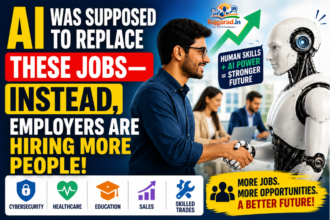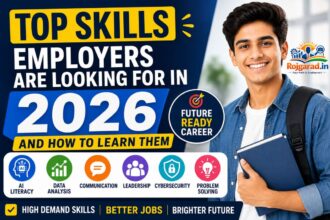
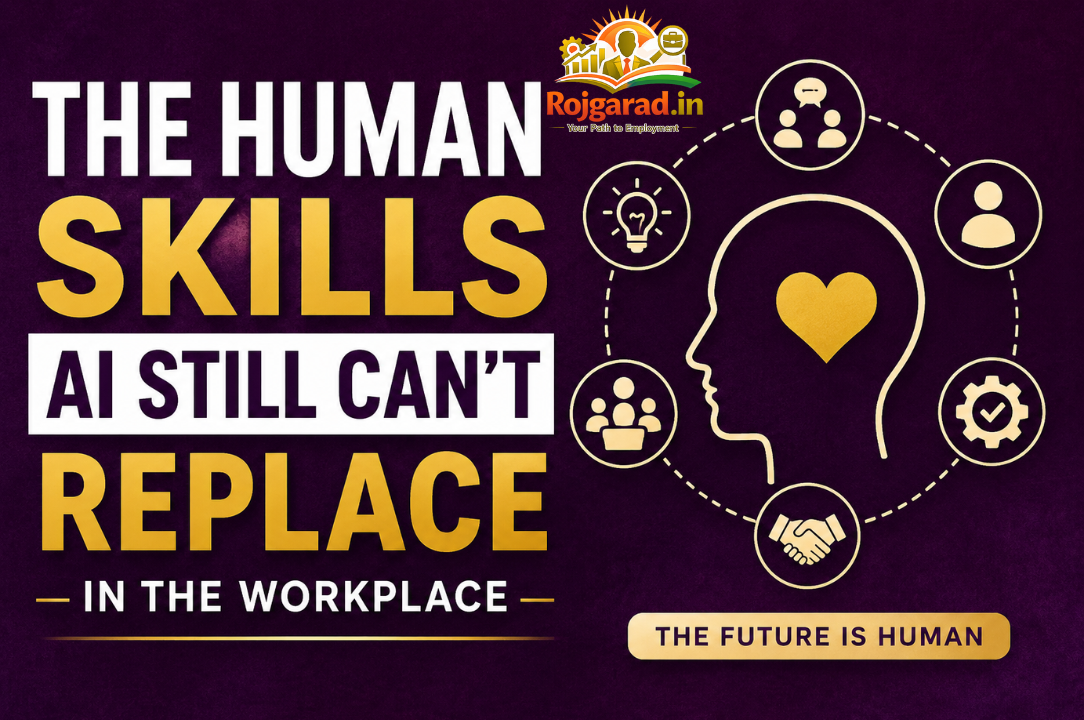
Artificial Intelligence has become one of the most discussed technologies in the modern workplace. From writing emails and analyzing data to generating reports and assisting with coding, AI tools are now performing tasks that once required hours of human effort. This rapid advancement has created fears that many jobs could disappear in the coming years. However, the latest employment trends tell a different story. Instead of replacing people entirely, AI is changing what employers expect from workers. Companies are increasingly looking for employees who can combine technical knowledge with uniquely human abilities such as communication, leadership, creativity, emotional intelligence, problem-solving, and decision-making. As businesses automate routine work, these human skills are becoming the main factors that separate successful professionals from the rest. For students preparing for careers in 2026 and beyond, understanding these changes is essential because the future job market will reward people who can work alongside AI rather than compete against it.
Why This Matters in 2026
The conversation around artificial intelligence often focuses on which jobs may disappear in the future. While automation is undoubtedly changing industries, many experts now believe the bigger transformation is happening in the skills employers value. AI can process information quickly, identify patterns, and generate content, but it still struggles with understanding emotions, handling complex human relationships, resolving conflicts, and making ethical judgments in uncertain situations. These limitations mean that human workers remain essential in many roles. Organizations are increasingly investing in employees who can think critically, collaborate effectively, and provide leadership during periods of rapid change. For students entering colleges, universities, and professional training programs, these developments highlight the importance of building capabilities that machines cannot easily replicate.
Human Skills vs AI Capabilities
| Human Skill | Can AI Fully Replace It? | Current Workplace Importance |
|---|---|---|
| Emotional Intelligence | No | Very High |
| Leadership | No | Very High |
| Creativity | Limited | Very High |
| Critical Thinking | Limited | Very High |
| Communication | Partial | Very High |
| Team Management | No | High |
| Ethical Decision-Making | No | High |
| Relationship Building | No | Very High |
How AI Changed the Workplace
The rise of generative AI tools has transformed workplaces across multiple sectors. Administrative tasks, data entry, content drafting, and information analysis can now be completed more efficiently with AI assistance. Businesses have adopted these technologies to improve productivity and reduce repetitive workloads. However, this transformation has also revealed the limitations of automation. While AI can generate answers based on existing information, it lacks genuine understanding, personal experience, accountability, and human intuition. Organizations quickly realized that technology works best when supporting employees rather than replacing them completely. As a result, companies have shifted their focus toward recruiting individuals who can use AI effectively while contributing uniquely human strengths.
Employers Are Prioritizing Human Skills
Recent hiring trends show a significant shift in recruitment strategies. Many employers now consider communication, adaptability, creativity, and emotional intelligence as critical skills for future employees. As AI takes over routine responsibilities, workers are expected to focus more on strategic thinking, collaboration, innovation, and customer relationships. Entry-level professionals are increasingly required to demonstrate problem-solving abilities and interpersonal skills that help organizations navigate complex challenges. Recruiters are also paying greater attention to candidates who show resilience, flexibility, and the ability to learn continuously in a rapidly changing technological environment.
The Human Skills AI Still Cannot Replace
Emotional Intelligence Remains a Major Advantage
Emotional intelligence involves understanding emotions, recognizing social cues, and responding appropriately to different situations. Managers use emotional intelligence to motivate teams, resolve workplace conflicts, and build trust among employees. Customer-facing professionals rely on empathy to understand client concerns and create positive experiences. AI can analyze sentiment and identify emotional patterns, but it cannot genuinely understand human feelings or establish authentic relationships. This makes emotional intelligence one of the most valuable workplace skills in the AI era.
Critical Thinking Becomes More Important
As AI generates increasing amounts of information, workers must evaluate its accuracy and relevance. Critical thinking helps professionals assess evidence, identify biases, and make informed decisions. Organizations need employees who can question assumptions, interpret complex situations, and determine whether AI-generated outputs are reliable. Rather than reducing the need for critical thinking, AI has increased its importance because humans remain responsible for final decisions.
Creativity Continues to Drive Innovation
AI can generate text, images, and ideas based on patterns from existing data, but genuine innovation often comes from uniquely human experiences and perspectives. Creative thinking allows professionals to develop new products, solve unusual problems, and identify opportunities that have never existed before. Businesses seeking growth and competitive advantages continue to depend on human creativity to drive innovation and strategic development.
Leadership Cannot Be Automated
Effective leadership requires vision, inspiration, trust-building, and decision-making under uncertainty. Leaders must understand team dynamics, manage conflicting priorities, and motivate employees toward common goals. While AI can provide data and recommendations, it cannot replace the human qualities that make leadership effective. Organizations facing change and uncertainty increasingly value leaders who can guide teams through complex situations.
Communication Remains Essential
Strong communication skills help professionals explain ideas, negotiate agreements, resolve misunderstandings, and collaborate effectively. AI can draft messages and presentations, but successful communication often depends on context, tone, cultural understanding, and interpersonal awareness. Employees who communicate clearly and persuasively continue to be highly valued across industries.
Ethical Judgment Is Becoming More Important
As AI systems become more influential in business decisions, ethical concerns are receiving greater attention. Organizations must consider fairness, privacy, accountability, and social responsibility when using technology. Human judgment remains necessary to evaluate ethical implications and ensure decisions align with organizational values. This responsibility cannot be delegated entirely to automated systems.
Skills Expected to Grow in Importance
| Skill Area | Expected Demand Growth by 2030 |
|---|---|
| Analytical Thinking | Very High |
| Creative Thinking | Very High |
| Leadership | High |
| Social Influence | High |
| Emotional Intelligence | High |
| Resilience and Adaptability | High |
| AI Literacy | High |
| Communication | Very High |
Why Students Are Directly Affected
Students entering the workforce today will spend much of their careers in environments where AI is integrated into daily operations. Traditional advantages such as memorizing information or performing repetitive tasks may become less valuable as automation expands. Employers are increasingly seeking graduates who can collaborate, solve problems, think strategically, and adapt to new technologies. Students who focus only on technical knowledge may struggle to stand out, while those who combine technical expertise with strong interpersonal skills are likely to enjoy better career opportunities.
Previous Year Trend Analysis
2023: Focus on AI Awareness
Many organizations were still experimenting with AI tools, and discussions largely centered on understanding the technology and its potential impact.
2024: Early Workplace Integration
Companies began integrating AI into customer service, marketing, software development, and administrative operations. Concerns about job displacement increased during this period.
2025: Human-AI Collaboration Emerged
Businesses discovered that combining human expertise with AI capabilities produced better outcomes than relying solely on automation. Demand for adaptable employees increased significantly.
2026: Human Skills Become Competitive Advantages
Employers now view communication, creativity, leadership, and emotional intelligence as essential qualities for long-term success. Human skills are increasingly becoming the differentiating factor in hiring decisions.
Expected Impact on the Job Market
The growing importance of human skills is expected to reshape recruitment practices, educational programs, and workplace training. Companies may place greater emphasis on interviews, group projects, and practical assessments that evaluate interpersonal abilities. Universities and colleges are also likely to introduce more programs focused on communication, leadership, teamwork, and critical thinking. Professionals who continuously develop these capabilities could benefit from stronger career growth and greater job security.
Expert Opinion
Career experts increasingly emphasize that AI should be viewed as a productivity tool rather than a direct competitor. The most successful professionals are expected to be those who understand how to leverage AI while contributing skills that technology cannot replicate. Experts also note that future workplaces will reward adaptability because technological change is expected to continue accelerating over the coming decade. Workers who embrace lifelong learning and develop strong human capabilities are likely to remain valuable regardless of future technological advancements.
What Students Should Do Now
Students should begin exploring AI tools while simultaneously strengthening communication, creativity, leadership, and emotional intelligence. They should seek opportunities to work in teams, participate in extracurricular activities, and gain real-world experience through internships. Developing a habit of continuous learning will also be important because workplace requirements are changing rapidly. Building both technical and human skills can provide a significant advantage in future recruitment processes.
Expected Next Update
Over the next few years, employers are expected to place even greater emphasis on human-AI collaboration. Recruitment processes may increasingly evaluate problem-solving abilities, communication skills, and leadership potential alongside technical qualifications. Educational institutions are also expected to expand training programs that help students prepare for this evolving job market.
Important Timeline
| Period | Workplace Trend |
|---|---|
| 2023 | AI awareness and experimentation |
| 2024 | Expansion of AI adoption |
| 2025 | Growth of human-AI collaboration |
| 2026 | Human skills become major hiring factor |
| 2027 and Beyond | Hybrid workforce expected to dominate |
FAQs
What are the top human skills AI cannot replace?
Emotional intelligence, leadership, creativity, critical thinking, ethical judgment, relationship building, and effective communication remain difficult for AI to replicate.
Will AI eliminate all jobs in the future?
Most experts believe AI will transform jobs rather than eliminate all of them. Many roles will evolve to include greater focus on human-centered skills.
Why are employers valuing soft skills more?
As AI automates routine tasks, organizations need employees who can solve complex problems, collaborate effectively, and make strategic decisions.
Should students still learn AI tools?
Yes. Understanding AI tools is becoming important in many industries. However, students should also develop communication, leadership, and critical thinking skills.
Which industries benefit most from human skills?
Education, healthcare, management, consulting, sales, customer service, marketing, and leadership roles rely heavily on human interaction and decision-making abilities.
What is the best strategy for future careers?
The strongest approach is combining AI literacy with human skills such as creativity, communication, emotional intelligence, and adaptability. Professionals who can work effectively alongside AI are expected to have the greatest opportunities in the coming years.