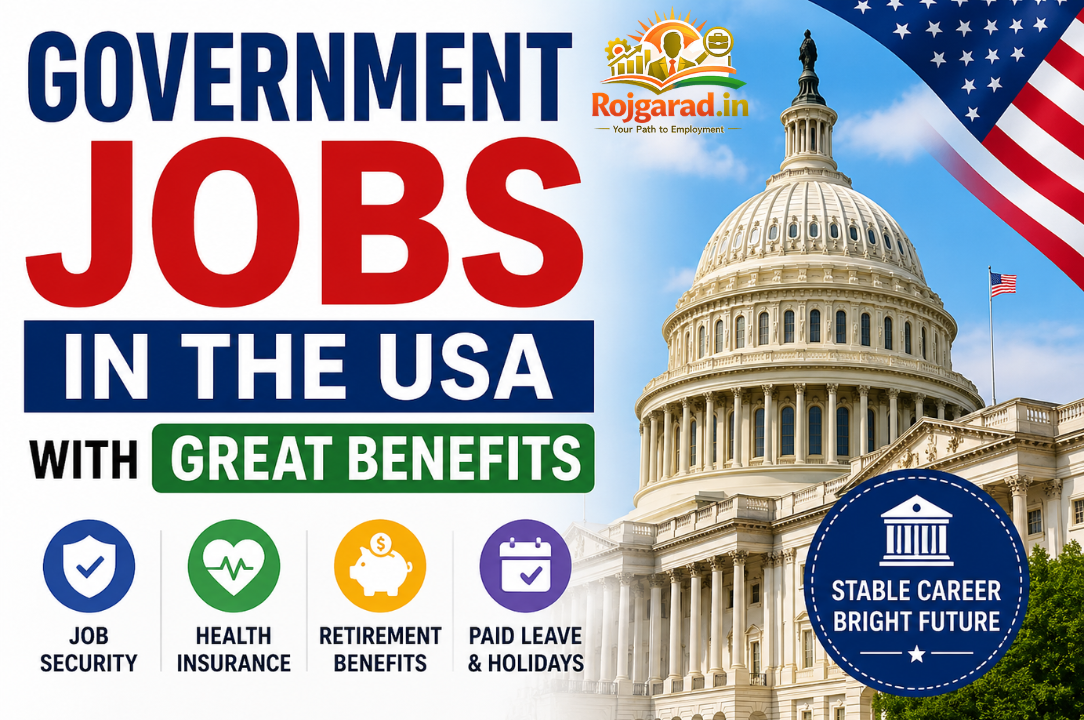
Government jobs in the United States are among the most stable and respected career options available today. While many people focus on private-sector employment, federal, state, and local government positions offer unique advantages that often include excellent salaries, healthcare coverage, retirement benefits, paid leave, job security, and opportunities for career advancement. For students, fresh graduates, experienced professionals, and even international applicants who qualify for certain positions, government careers can provide long-term financial stability and professional growth. Understanding how government jobs work, what benefits they offer, and how to apply successfully can help candidates make informed career decisions and build rewarding futures in public service.
Overview Of Government Jobs in the USA with Great Benefits
| Feature | Details |
|---|---|
| Sector | Federal, State, and Local Government |
| Job Security | High |
| Average Salary Range | $40,000 – $150,000+ per year |
| Retirement Benefits | Pension and retirement savings plans |
| Health Insurance | Comprehensive medical, dental, and vision coverage |
| Paid Leave | Vacation, sick leave, and federal holidays |
| Career Growth | Strong promotion opportunities |
| Work-Life Balance | Generally better than many private-sector jobs |
| Application Platform | USAJOBS and state government portals |
| Suitable For | Students, graduates, professionals, veterans |
Understanding Government Jobs in the USA
Government employment in the United States is divided into three major categories: federal government jobs, state government jobs, and local government jobs. Federal employees work for national agencies such as departments dealing with defense, transportation, healthcare, taxation, environmental protection, and public administration. State government employees serve individual states, while local government workers support cities, counties, and municipalities. Each level of government offers thousands of positions across diverse fields including engineering, healthcare, information technology, education, law enforcement, finance, administration, research, and public policy. Unlike many private-sector roles that may be influenced by market conditions, government positions often provide greater stability and structured career progression.
Why Government Jobs Are Popular
Government careers remain popular because they combine financial security with meaningful public service. Employees contribute directly to programs and services that impact millions of people. Many workers appreciate predictable schedules, comprehensive benefits packages, and opportunities for continuous learning. During economic downturns, government jobs are often viewed as safer than private-sector employment because public institutions continue operating even when industries face challenges. This combination of stability and purpose attracts both young professionals and experienced workers seeking long-term career growth.
Types of Government Jobs Available
Federal Government Jobs
Federal agencies employ professionals in nearly every discipline imaginable. Positions range from administrative assistants and accountants to cybersecurity specialists, engineers, healthcare providers, economists, and scientists. Agencies frequently recruit individuals with technical expertise as well as general administrative skills. Federal careers often provide some of the highest government salaries and most extensive benefit packages.
State Government Jobs
State governments manage education systems, transportation infrastructure, public health programs, environmental services, and regulatory agencies. Employment opportunities include teachers, healthcare administrators, transportation planners, legal professionals, public safety officers, and technology specialists. State jobs often offer attractive retirement plans and region-specific benefits.
Local Government Jobs
Cities and counties require employees to manage essential public services such as sanitation, utilities, public works, parks, emergency response, and community development. Local government careers can be especially appealing for individuals who want to serve their communities directly while enjoying stable employment and competitive benefits.
Top Government Jobs with Excellent Benefits
| Job Role | Average Salary Range | Benefits Level | Career Growth |
|---|---|---|---|
| IT Specialist | $70,000 – $140,000 | Excellent | High |
| Financial Analyst | $60,000 – $120,000 | Excellent | High |
| Engineer | $75,000 – $150,000 | Excellent | High |
| Healthcare Professional | $65,000 – $160,000 | Excellent | High |
| Administrative Officer | $50,000 – $100,000 | Very Good | Moderate |
| Law Enforcement Officer | $55,000 – $130,000 | Excellent | High |
| Human Resources Specialist | $55,000 – $110,000 | Very Good | High |
| Cybersecurity Analyst | $80,000 – $170,000 | Excellent | Very High |
Eligibility Requirements
Government job eligibility varies depending on the position, agency, and level of government. Most roles require applicants to meet minimum educational qualifications, demonstrate relevant skills, pass background checks, and satisfy citizenship or work authorization requirements. Entry-level positions may only require a high school diploma or bachelor’s degree, while specialized roles often demand advanced degrees, certifications, or professional experience. Certain jobs involving national security may require security clearances, while healthcare and engineering positions typically require professional licensing. Candidates should carefully review job announcements to understand specific requirements before applying.
Educational Qualifications
Different government jobs require different educational backgrounds. Administrative positions may accept candidates with associate or bachelor’s degrees, while professional roles in engineering, healthcare, law, and scientific research often require specialized qualifications. Information technology and cybersecurity careers frequently value industry certifications alongside formal education. Students should focus on building relevant academic credentials and practical skills that align with their desired government career paths.
Benefits of Government Jobs in the USA
One of the strongest reasons people pursue government careers is the extensive benefits package. Government employees often receive healthcare coverage, retirement plans, paid leave, disability insurance, life insurance, training opportunities, and flexible work arrangements. These benefits can significantly increase the overall value of compensation beyond the base salary. In many cases, the total compensation package may exceed what similar private-sector positions offer.
Health Insurance Benefits
Government employers typically provide comprehensive health insurance plans covering medical, dental, and vision care. Employees often pay lower premiums compared to private-sector workers. Family coverage options, preventive care services, and wellness programs further enhance the value of these healthcare benefits. Access to reliable healthcare coverage contributes significantly to long-term financial security.
Retirement Benefits
Retirement programs represent one of the most valuable advantages of government employment. Many government workers participate in pension systems alongside retirement savings plans. Employer contributions, matching programs, and structured retirement benefits can help employees build substantial financial resources for the future. These retirement packages often remain stronger than those available in many private-sector organizations.
Paid Leave and Holidays
Government employees generally enjoy generous vacation policies, sick leave benefits, parental leave programs, and paid federal holidays. This emphasis on work-life balance helps employees maintain productivity while managing personal responsibilities. Long-term employees often accumulate additional leave benefits over time, further enhancing career satisfaction.
Work-Life Balance Advantages
Government organizations frequently emphasize sustainable workloads and predictable schedules. While some positions involve demanding responsibilities, many employees enjoy regular working hours, remote work opportunities, flexible schedules, and supportive workplace cultures. These factors contribute to reduced stress and improved quality of life compared to certain high-pressure private-sector environments.
Salary Comparison Of Government vs Private Sector
| Factor | Government Jobs | Private Sector Jobs |
|---|---|---|
| Job Security | High | Moderate |
| Retirement Benefits | Excellent | Varies |
| Healthcare Coverage | Strong | Varies |
| Paid Leave | Generous | Moderate |
| Salary Growth | Structured | Performance-Based |
| Work-Life Balance | Better on Average | Depends on Employer |
| Layoff Risk | Lower | Higher |
| Long-Term Stability | Excellent | Moderate |
Important Dates and Recruitment Cycles
Unlike academic entrance examinations with fixed schedules, government hiring occurs throughout the year. Federal agencies regularly post vacancies as workforce needs arise. State and local governments also recruit continuously based on staffing requirements. Students interested in government careers should monitor official job portals frequently, create alerts for relevant positions, and prepare application materials in advance. Since some recruitment processes can take several months, early preparation is highly beneficial.
Step-by-Step Process to Apply for Government Jobs
Step 1: Identify Career Goals
Candidates should begin by determining which type of government work aligns with their education, interests, and long-term objectives. Understanding career preferences helps narrow job searches and improves application quality.
Step 2: Research Available Positions
Applicants should explore federal, state, and local government employment portals to identify suitable opportunities. Reading job descriptions carefully helps candidates understand qualification requirements and application expectations.
Step 3: Prepare a Professional Resume
Government resumes often require more detailed information than private-sector resumes. Applicants should highlight education, work experience, achievements, certifications, volunteer activities, and technical skills relevant to the position.
Step 4: Submit the Application
Candidates must complete online applications accurately and provide all requested documents. Missing information can result in automatic disqualification even when qualifications are strong.
Step 5: Complete Assessments
Many positions require assessments, questionnaires, skills tests, or written evaluations. Preparation can significantly improve performance during these stages.
Step 6: Attend Interviews
Shortlisted candidates may participate in structured interviews designed to evaluate competencies, experience, and suitability for public service roles. Clear communication and professional preparation are essential.
Step 7: Background Verification
Government employers frequently conduct background investigations to verify employment history, education, and other relevant information. Some positions may require more extensive security reviews.
Step 8: Receive Appointment and Begin Training
Successful candidates receive formal job offers and may participate in orientation or training programs before assuming full responsibilities.
Common Mistakes Applicants Make
Many candidates underestimate the importance of carefully reading job announcements and tailoring applications accordingly. Others submit incomplete documentation, fail to provide sufficient detail in resumes, miss application deadlines, or neglect preparation for assessments and interviews. Some applicants apply broadly without considering qualification requirements, resulting in repeated rejections. Understanding agency expectations and following instructions precisely can significantly improve success rates.
Expert Tips for Success
Successful applicants often begin preparing months before applying. Building relevant skills, gaining internship experience, earning certifications, and developing strong communication abilities can strengthen applications. Networking with professionals in public service, attending career events, and staying informed about government workforce needs can also create valuable opportunities. Consistency and patience are important because government hiring processes can take longer than private-sector recruitment.
Student Advice
Students interested in government careers should focus on academic performance while developing practical skills through internships, volunteer work, research projects, and leadership activities. Learning data analysis, communication, project management, and digital technology skills can improve competitiveness across many government sectors. Students should also explore scholarship programs, fellowship opportunities, and student employment initiatives that provide early exposure to public service careers. Building a strong professional profile before graduation can create significant advantages during future job searches.
Career Impact
A government career can provide long-term professional stability, financial security, and opportunities to make meaningful contributions to society. Employees often gain experience managing large-scale projects, developing policy solutions, delivering public services, and working with diverse stakeholders. These experiences can strengthen leadership capabilities and open pathways to senior management positions. Government service can also create opportunities for transitions into consulting, academia, nonprofit organizations, and private-sector leadership roles later in one’s career.
Future Opportunities in Government Employment
Government agencies are increasingly investing in emerging fields such as cybersecurity, artificial intelligence, data science, renewable energy, infrastructure modernization, public health, and digital transformation. As technology continues reshaping public services, demand for skilled professionals in technical and analytical roles is expected to grow. Students who develop expertise in high-demand disciplines can find attractive opportunities with competitive compensation and excellent benefits. Future government workplaces are also likely to expand flexible work arrangements and digital collaboration practices.
Government Jobs Best Suited for International Students
International students who eventually obtain appropriate work authorization or permanent residency may find opportunities in certain government-related organizations and public institutions. While many federal positions require citizenship, some state, local, educational, and research roles may have different eligibility standards. Understanding immigration requirements and employment regulations is essential for international candidates planning long-term careers in the United States.
Skills That Increase Hiring Chances
Employers increasingly value analytical thinking, communication skills, teamwork, problem-solving ability, digital literacy, project management expertise, and adaptability. Technical capabilities such as cybersecurity knowledge, programming, data analytics, cloud computing, financial analysis, and engineering skills are particularly valuable. Candidates who combine technical competence with strong interpersonal skills often enjoy greater career success in government environments.
Challenges of Government Careers
Although government jobs offer numerous advantages, candidates should also understand potential challenges. Hiring processes may be lengthy, organizational structures can be complex, and promotion systems sometimes follow formal procedures that require patience. Employees may also need to navigate regulations, compliance requirements, and public accountability standards. However, many professionals find that the benefits and stability outweigh these challenges.
FAQs
1. Are government jobs in the USA secure?
Yes, government jobs are generally considered more stable than many private-sector positions due to structured employment systems and ongoing public service needs.
2. Do government employees receive pensions?
Many government employees have access to retirement programs that may include pension benefits and retirement savings plans.
3. Can fresh graduates apply for government jobs?
Yes, many entry-level positions are specifically designed for recent graduates and early-career professionals.
4. What is the main portal for federal government jobs?
USAJOBS is the primary platform used for federal government recruitment.
5. Are government salaries competitive?
Many government positions offer competitive salaries, particularly when combined with benefits and retirement packages.
6. Do government jobs offer remote work options?
Some agencies provide remote or hybrid work arrangements depending on the nature of the position.
7. How long does the hiring process take?
Government hiring can take several weeks or months depending on the agency and position.
8. Which government sectors are growing fastest?
Cybersecurity, healthcare, data analytics, technology, infrastructure, and environmental services are among the fastest-growing areas.
9. Do all government jobs require citizenship?
No, requirements vary by position, though many federal jobs require U.S. citizenship.
10. Why should students consider government careers?
Government careers offer stability, excellent benefits, professional development opportunities, and the chance to contribute to society through meaningful work.